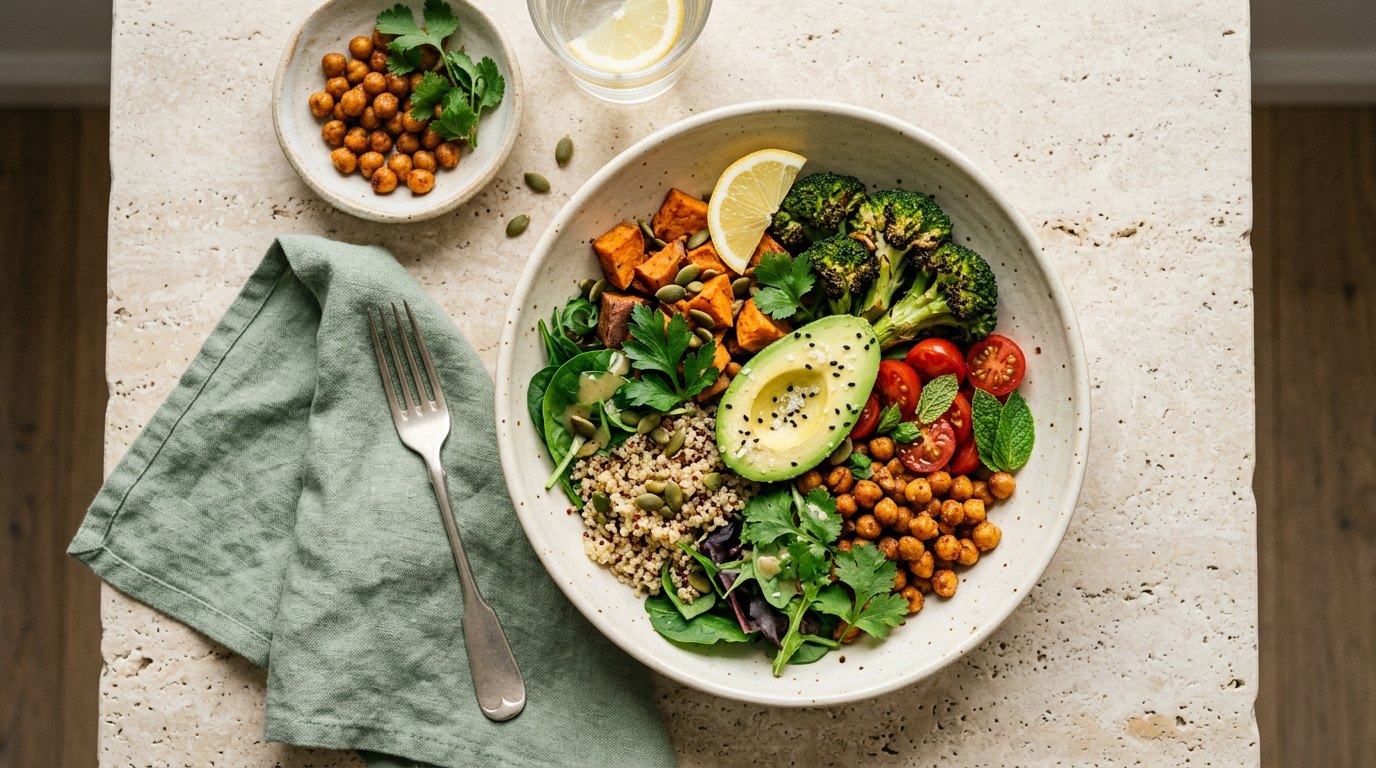
Food is nourishment, connection, comfort, culture, and enjoyment. A balanced approach doesn’t need to mean rigid rules. It can mean making room for a variety of foods in a way that respects your preferences, your resources, and the life you actually live.
Think about adding, not restricting
Instead of focusing only on what to avoid, consider what you might add. A colorful vegetable, a satisfying source of protein, a whole grain, or a favorite fruit can bring variety to a meal you already enjoy. The best choice is often the one that is available, appealing, and appropriate for you.
There is no need to make every plate look a certain way. Access, culture, time, food preferences, and individual health needs all shape what eating well can look like. Frozen, canned, and convenient foods can be useful parts of a flexible routine.
Build around familiar foods
Start with meals you already like. A bowl of rice and beans might be paired with vegetables; a favorite sandwich might be enjoyed alongside fruit; a simple soup might be made more satisfying with ingredients you have on hand. Adjust these ideas for allergies, dietary needs, and personal preferences.
Keeping a few ingredients you enjoy nearby can make a meal feel less demanding on a busy day. There is no requirement to cook from scratch or follow a particular trend for food to be nourishing.
Pay attention to your own rhythms
When possible, give yourself time to notice hunger, fullness, and how different meals make you feel. A regular eating routine may be helpful for some people, while others need a different approach. Your schedule and any medical guidance you have received matter too.
Eating without rushing is not always possible. When it is, creating a comfortable space, sitting down, or taking a pause before a meal may help you reconnect with the experience of eating.
Leave room for enjoyment
A meal shared with someone you love, a cultural tradition, or a familiar favorite can be part of a nourishing life too. Flexibility can make food feel more welcoming than an all-or-nothing mindset. Food does not need to be earned, and a single meal does not define your wellbeing.
Ask for individual guidance
Nutrition needs are personal. If you have a medical condition, food allergy, concerns about eating, or questions about a dietary change, a registered dietitian or other qualified professional can help you find an approach that fits your needs. Seek individualized advice before making substantial changes to a prescribed eating plan.